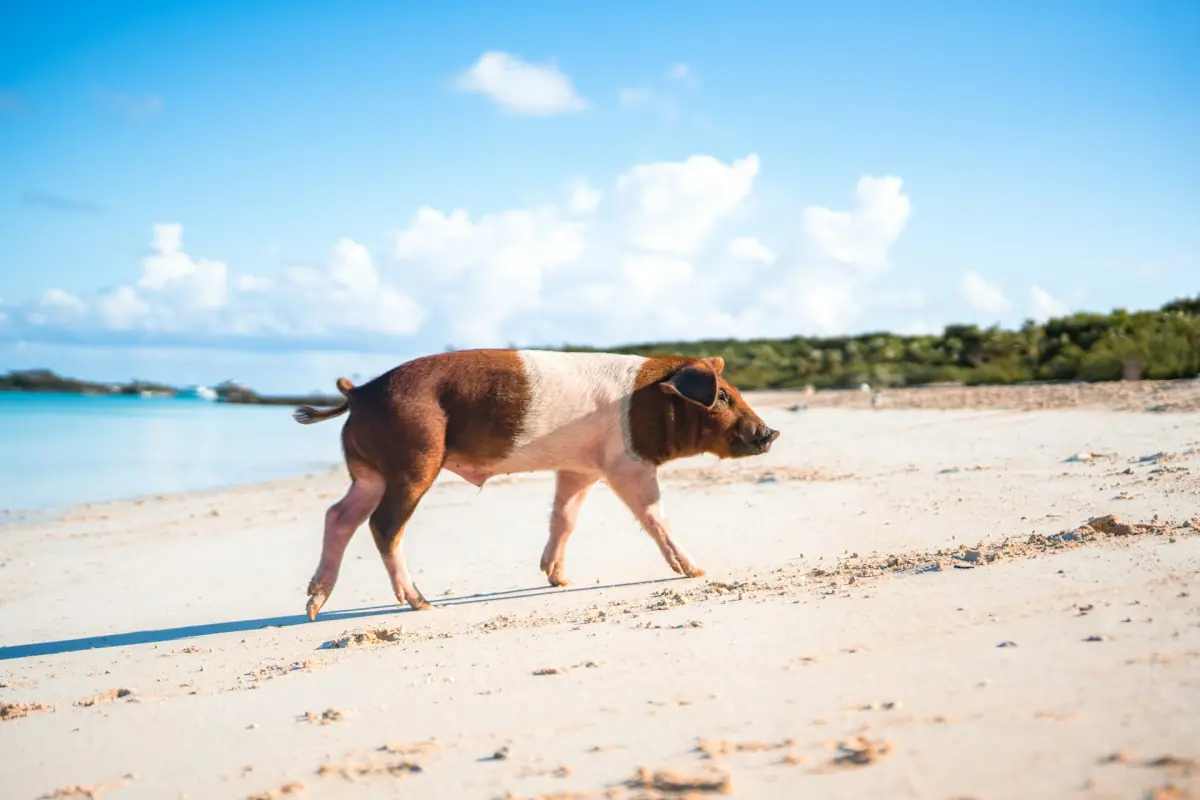
Pig Beach facts: the place and its uncertain history
Pig Beach facts begin with the location: the original swimming pigs live on Big Major Cay in the Exumas. The Bahamas tourism description calls the island uninhabited and the pigs non-native. That identifies the destination, but it does not establish how the animals arrived. Stories about sailors or a shipwreck remain legends rather than a settled history of the island.
Another story attributes their presence to people moving pigs from Staniel Cay because of the smell. Treat this too as an origin story, not as a reliable chronology. It is possible to appreciate the unusual setting without assigning a founding date or repeating a single explanation as fact. The history leaves questions open; a confident retelling on an excursion does not settle them.
The destination overview separates Big Major Cay from other swimming-pig beaches. When comparing excursion routes, look for the actual island name. An animal encounter on another island has its own setting and should not be used to describe conditions at the original Pig Beach.

How care is described
The tourism description mentions freshwater tanks, separate animal areas, veterinary care and a feeding trough intended to reduce ingestion of sand and salt water. These are descriptions of care arrangements, rather than a dated assessment of every animal's current health. Assessing the health of the whole group requires more than a photograph of a resting or swimming pig.
Approach the visit as an opportunity to observe animals, rather than a promise of close contact. Swimming, feeding and posing for a photograph are different interactions. An excursion that reaches the island does not establish a welfare standard by itself. Consider how the visit will work, how guidance is given and whether you are comfortable watching without approaching.
A visit to Big Major Cay
This boat trip includes a visit to Big Major Cay and nearby cays.
Hand-picked tours, booked through GetYourGuide. Prices are indicative starting prices in US dollars (as of November 2026). Tap a tour for live availability and the current price in your currency.

An itinerary visiting Big Major Cay
The Nassau powerboat route includes the original Pig Beach, Allen's Cay and Compass Cay, with lunch and drinks. Choose it for its route; the visit carries no promise of animal-welfare certification.
Rules and guidance on site
Listen to the guide and read the signs before any feeding or animal contact. The tourism description mentions suitable foods and feeding signs, but a general list is not a reason to bring food and begin feeding on arrival. Ask what is appropriate at that particular visit and follow the instructions you receive. You can choose to observe without joining a feeding activity.
A private visitor sheet from 2017 advised against hitting or riding pigs, pulling tails, placing hands in mouths, or offering sandy food, processed food or alcohol. Those are historical behaviour recommendations, not a statement of today's local law. They illustrate why restraint matters. Do not turn an advertised photograph opportunity into handling a piglet or trying to make an animal perform for the camera.
The 2017 deaths and the official explanation
In its statement of 3 March 2017, the Bahamas Ministry of Tourism expressed regret at the deaths of pigs on Big Major Cay. Referring to the agriculture minister and chief veterinarian, it identified swallowed sand as the cause. The statement also announced protective protocols. That announcement belongs to the history of the incident, rather than a complete description of current visitor procedures.
Alcohol should not be presented as the proven cause of those deaths. Retelling a dramatic explanation as certainty changes the meaning of the historical evidence. The useful point for a visitor is to take feeding guidance seriously, avoid improvised food and leave questions about current animal health to the people responsible for care. The historical incident and the condition of the animals on your future visit are separate questions.
Bite risk and choosing your level of contact
Pigs can bite. A tour description explicitly warns about bites and asks visitors to follow their guide, so friendliness in a photograph is not a safety promise. Discuss the planned interaction before entering the water and respect the crew's instructions. With children, think about supervision and their response to animals rather than relying on a child's ticket category as evidence of suitability.
The powerboat itinerary on this page includes Big Major Cay, Allen's Cay and Compass Cay, lunch and drinks. Sandbar or beach time depends on conditions. It is a route choice, not a welfare inspection or certification. For the long journey and its practical demands, use the Nassau day-trip guide; for the separate shark and iguana stops, read the guide to the nearby cays.
Questions about history and animal welfare
Did the pigs arrive after a shipwreck?
That is one of the origin legends. Their arrival story remains uncertain, so it should not be treated as an established historical event.
Can I feed pigs as soon as I arrive?
Wait for the guide and on-site instructions. A description of suitable foods does not replace guidance for that visit, and observing without feeding is a choice you can make.
Does an excursion ticket certify animal welfare?
A ticket describes the itinerary and included services. It should not be treated as an independent welfare assessment or a guarantee of harmless animal contact.